
Here we are, in the big 2026. As with all years, everyone is more confused than the last. The social future is easy to predict- people will always be a little bit puzzled outwardly, and deeply confused inside. It is shockingly easy to be pessimistic. It's our base state, after all. Human pessimism is a closer approximation of reality than human optimism- this is why we are all depressed. There's even a secret, hidden level of depression that happens if you go too far, at which point society calls you mentally ill and you gain and lose certain privileges.
God, pessimism is comforting isn't it? It's like sitting in a chair warmed by a person you once loved. But you must get up. You must get up, and do anything. In our world, it is easy to do the absolute bare minimum above nothing, skimming the top of the abyss. 0.0001% of a thing. I did a thing. I read Hell Screen, by Ryunosuke Akutagawa. It's a book which comrpised of 10 stories, each completely independant and interesting. It's only 200 little pages, some of the stories taking up as little as 8. These stories were written from 1915-1927, so they carry a certain war-affected despondency one comes to expect from that period, only amplified by how clearly miserable it's author is. That's where good art comes from, after all.
I'm going to review each of these stories, one by one. I may have very few things to say about some of them, as it becomes clearer and clearer how every single one of these tales is merely setup, for the final story: Spinning Gears. A true story, with the very author, Ryunosuke Akutagawa as it's protagonist. That last one. Never have I read something so grey. This is your chance to go and read Hell Screen now.
Our first story is called Rashōmon.
Rashōmon [10 pages]
A Rashōmon is simply a city gate, marking entry to the Suzaka Avenue- a central avenue leading to the palace-zone of a major city. There were, thus, two. One in Nara, which was not very storied or noteworthy, and the other in Kyoto. By the 12th century, it had fallen into great decay. It become known as a hideout for thieves and other criminals. It was common to abandon babies and dead bodies at the gate. This is the setting for Rashōmon, and context that is spelled out to the reader on the very first page. It follows a servant who is "waiting for the rain to end", but wait actually "had no idea what he was going to do once that happened". He is introduced only as a servant, a name which is defined in relation to a master- who we are told rejects the servant. Thus we are left with an aimless vagabond, aurafarming in the center of Kyoto's Rashōmon. This is a good way to start this book. It gets across a unique purposelessness- rejected by man, now trapped by unstoppable nature.
He proceeds into the gate's upper chamber, where Akutagawa indulges in several paragraphs of description about the many dead bodies that reside there. They are very dead. That much is clear. This is Rashōmon- a tone-setter. The very next thing the servant does is hold an old lady at sword-point, steals all her clothes (of which he has no need for) then kicks her full force. What was she doing amongst the corpses? Stealing hair to make a wig. There is not much hesitation from the servant, not much of anything other than the bare thought: "I have to become a thief".
This is a story intended to whet your tongue, but also ponder over morality under hardship. The servant definitely morally failed- but that's only relative to society. He acts in this story as an animal- just doing what he needs to survive. This villainification of the servant is done in critique of modern society. The Rashomon used to be a divine gateway. Now it's ruined by young thieves, torturing poor old ladies. It's all very "the world used to be better," but it's not quite in the way you think. Remember, the servant is only bad because hardships forced them to be. When the world is bad, poverty increases, and thus does crime. The Rashomon is only destroyed because people need to be thieves. Thus, Akutagawa creates a microcosm for the wider world within the lady and servant's interaction, further hitting it home by not even giving them names- it's intended to be that general.
But also, the servant definitely didn't need to be doin allat. Like kicking the old lady just was not necessary. Maybe Akutagawa is saying that humans fill a role- when we do evil things, even if necessary, it's easy to continue doing bad things. Calling a child a nuisance only makes them feel unchangeable- leading to more bad behavior.
This story is not that interesting. Poverty increases crime, and the world used to be easier to live in. This is only news to right wingers. It feels like the natural next step was to make a commentary on the police and militarianism, but maybe that was harder with all the war propaganda floating around. This *was* written in the 1920s.
In a Bamboo Grove [15 pages]
What a vague title. It doesn't really tell you anything.In a Bamboo Grove begins the trend in this book of unreliable narrators within Hell Screen. The story itself is about a murder/rape/something that happened *in a bamboo grove*. That last part is all that's clear, because we bounce around between like 5 or 6 different perspectives who all give completely different stories for what occurred. It's unclear who did what to whom with what weapon by what right. It gets so desperate the final account is from the ghost of the victum via spirit medium. This final account, which you might expect should be able to identify the murderer with 100% accuracy, is just as biased and unclear. No information is concrete at all.
You may have heard the word Rashōmon before. It's a 1950s japanese movie with a story *extremely* similar to In a Bamboo Grove, and inspired the term "Rashōmon Effect", where an event is so unclear it's only muddled further by testimony. That movie is unquestionably inspired by Akutagawa's stories, but it's more of a merge between Rashōmon and this tale, despite being named for it. In the movie, one of the characters professes to being a direct witness and spins a tale with far less ambiguity. The book is less kind- never giving us someone whom does not have a motive to lie. Thus, we learn nothing. I respect Akutagawa for creating this story as a sort of "literacy-training" for the following stories. Appreciate that all narrators from here onwards can and will be lying.
The Nose [11 pages]
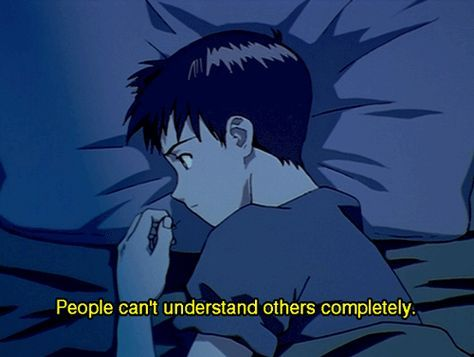
In this one, an esteemed priest worries about his hideous nose. So much so, he goes through a weird procedure done by a friend of his, with such sensual description I'm convinced it's a metaphor for gay sex. Weirdly yaoi-ful this one... and what's more, even after his nose becomes Normal, he still gets ridiculued. I suppose the lesson is to not feel trapped by your physical appearance. I'm not sure... this one is just kind of funny... we will see more comedy later on, so... I'm just saying this is a silly one and moving on...
The Spider Thread [5 pages]
This story begins immediately with essentially "let me tell you a story children". It's immediately telling the reader that the narrator is not in fact omniscient, and is in fact full of shit. What proceeds is a religious story concerning two people- the Buddha himself, and a sinful man called Kandata. From heaven, the Buddha looks down to see Kandata writhing in the "pool of blood"- and as a reward for a time he spared a spider, The Buddha lowers down a heavenly spider thread from which to deliver him from hell unto heaven. Kandata climbs this rope, only to make it halfway up and witness other sinners climbing up as well. As soon as he yells at them to get off his thread, it snaps, and he falls back into hell.
The book describes Kandata's sins specificially- he "burned houses", stole and "even killed people". Why would sparing a spider a single time grant him a chance of redemption? That isn't fair. Perhaps the morality of Rashōmon is supposed to weigh on us here- one should assume Kandata could have just been doing it to "survive". But does that grant him moral immunity? To what end do we apply morality, and where is it ok to ditch? Maybe as humans w
THEY'RE KIDS.
What?
THEY'RE CHILDREN. THE STORY IS BEING TOLD TO CHILDREN, ENA. IT'S SUPERFICIAL.
Oh. Right... this is a religious story. The immediate first line is "And now children, let me tell you a story," it's just. Meant to put the fear of god into them. It's telling the children that even in the best case scenario, you cannot be saved from hell. It's a story made up when a parent saw their kid lazering spiders in the garden with a magnifying glass.
But that's terrible. In this life, you have to kill spiders. This system of morality that the religion pushes here, where Kandata is saved for a single good deed in a life of bad ones, is a trap for children. It implies lives that are full of good deeds, where even a single sin damns them. It's designed to feed the us-vs-them mentality and fear of sinning that underlies religion. There are the bad people in the hell, the gay people, the people who made you uncomfy, and then there's the nice and easy people in heaven. This is the milk and blood of fascism. It's what feeds it and keeps it alive. This teacher, or whoever is telling the story, probably got told the same one as a kid. It sucks. It all sucks. This is a particular strain of sadness, one that comes from the entrapment of a religious mindset. When someone tells you they are religious, don't try and debate them or change their mind. It's not like you have the right model of the universe either. No, when someone tells you they are religious, the only course of action is to feel bad for them. Feel bad they were conned. Empathise, where the scriptures do not.
Funnily enough, this text is actually about buddhism. Which I totally fuck with, and typically does not pull this Christian shit. It's like Akutagawa is saying not to invite these values into our interpretation of Buddhism. It is very important to emulate the qualities the Buddha had, instead of worshipping blindly. Worship leads to desire- and desire leads further from Nirvana.
OK ENA. ENOUGH BUDDHISM ANALYSIS. YOU ARE WHITE AND UNEXPERIENCED IN RELIGIOUS STUDY. FOCUS.
HELL SCREEN [47 PAGES]
As Akutagawa tends to do, he opens this chapter with a line that summarises the biases of the narrator. "I am certain there has never been anyone like our great Lord of Horikawa..." they say, "and I doubt there will ever be another". The rest of the opening segment continues with similarly dick-sucking dialogue- making incredible praise like they were paid to do it. It even extends into the supernatural, describing the lord as banashing ghosts with a single shout, or even prevailing against a group of rumoured goblins within the capital. He's described as above other people by a *wide* margin, and to connect it all around, he's also said to be the rumoured reincarnation of the Buddha.
Keeping in mind my interpretation of Spider Thread, this narrator is full of Blasphemy, right? They talk about him like he's Goku. If the point of Buddhism is to rid yourself of earthly desire, it's a bit dissonant to keep eating the dirt this guy walks on. This is what I meant regarding how worship leads to desire, and how Akutagawa lines up these seemingly disconnected stories like a genius. It's something we could use in the modern day- forced media literacy training. Imagine forcing someone to watch The Wolf of Wall Street, American Psycho and Breaking Bad back-to-back. By putting those stories next to eachother, you can *really* reinforce the themes they share- i.e, loser-man acts like a sigma. Speaking of sigmas,
Yoshihide is described as a "thoroughly unpleasant little old man", and has the nickname "Monkeyhide". Oooh he sucks. Oh yeah, this narrator really wants you to know this guy sucks. He's a "terrible miser" and "in fact, he had many evil traits". This narrator has even heard that the Abbot of Yokawa, a man who is "such an eminent Buddhist prelate", would "turn purple" at the mere mention of Yoshihide. Ohohohoho what a Bad Guy. He is Generally Unsociable and Sour. And he is Old. Oh ho ho.
This is all very much bullshit and in fact the only character traits we can read inbetween the lines to get is that he's generally secluded and doesn't like the people around him. There is one compliment given to him though, something undeniable about Yoshihide: he is the greatest painter in the land. Thus, for "whatever reason", (the narrator refuses to say why) the Lord orders Yoshihide to paint an eight-panel folding screen of Hell. The Hell Screen.
He also has a daughter. Who he loves very much :). There is also a monkey involved. There's a monkey. The daughter of Yoshihide has a pet monkey :) Who she loves very much :).
I can't do justice to the description Akutagawa gives to this Hell Screen. Sometimes a writer creates a character or concept that is impossible to even describe. In 2022, I played a mobile visual novel called Penrose. It had a very particular descriptive stlye that stuck with me, in which it gave alot of precision to every detail very efficiently. This was true for everything besides the crux of the plot- a pattern of ordinary shapes that solves every problem in the universe and breaks the fabric of reality just by being drawn. This, obviously cannot be described in exact terms, because by describing it you bring it into existance. Like how sci-fi movies can never show the math on screen- because to do that you'd have to invent the technology. House of Leaves does a similar thing. I call this a Penrose Moment whenever I spot it, because of that first encounter I had with it.
Akutagawa should then, encountering the Penrose problem, not be able to get across the artistic prowess of the worlds greatest artist's greatest piece- yet the Hell Screen is described so well throughout the story (never all at once! it's described in pieces) that you can feel the meaning of what Yoshihide wanted to get across. The first description of it only goes over the composition- and it's subversion is clear. It has all the "Ten Kings of Hell in one small corner" and a "firestorm enveloping the rest of the screen". It's hilarious! It's making fun of what art should be! In the background, there has been Christ in Limbo by Hieronymus Bosch the entire time. Look at it. It's grotesuqe and absurdly interesting, but sweeping your eyes over it, with a CRT filter obscuring it, all you get is "oh yeah. that's hell". The Hell Screen would be ridiculous to look at! Imagine putting up 8 screens of Just Fire in a royal setting (remember, it's being commissined for basically The King) with 10 little demons in the bottom right. It would look silly!!!
And yet it's beautiful, because uh, Yeah. That's Hell. Let's be Realistic now, did you expect a rule-of-thirds ass composition? It's supposed to be revolting. Why make hell pretty? I'm sure all the sinners suffering there would not describe Hell as "comforting to the eye". No, they would have no eyes.
BECAUSE OF THE FIRE.
Yeah. Because of the fire.
YEAH.
...anyway, Yoshihide is clearly a Little Miffed with his society. Beauty is boring. He says as much- how other artists "can't appreciate the beauty of ugliness", as was made clear through his realistic depiction of hell. In fact, that's his whole agenda. Society is too far apart from the natural order. Why listen to a guy you could throw out the window? It's delusional. The screen is Yoshihide's Vent Art, something that becomes less and less subtle as more details of it are divulged. He includes people from "all walks of life", from lowly beggars to the literal friends and consorts of the Lord. The narrator focuses on one part of the screen the most though, and as we can say that Yoshihide is the Original Sigma, then this part that the Haters focus on should be analysed as the most controversial (and therefore, most artistically juicy) piece of the artwork.
It is a carriage, crashing into the flames, with a beautiful woman inside of it. The woman is so beautiful she could even be "one of His Imperial Majesty's own Consorts or Intimates". This, in meaning, is no different to any other part of the screen, but it is rendered so beautifully (and, Akutagawa's description does alot of lifting here) that it's visual stun draws the eye there. This to be expected- Yoshihide is surrounded by Vapid men with no media literacy. This part of the screen, in no way different to the rest, but just happens to be done "realistically" with a pretty lady, is the part that is focused on- because they are unable to interpret the meaning behind anything. These men do not care for art. Yoshihide is comissioned simply because it's thought of as high-class to like art. To have a big piece in the dining room. A folding screen. A fucking folding screen. They asked him to render eight panels of hell on a screen that can be *folded* and *tucked away*. What else are you supposed to do, but draw all the people your boss cares about burning in hell? It's honestly a pretty reserved reaction. Imagine asking Michelangelo to paint the sistine chapel on a curtain. Only someone who has no care for art as art, and only art as a social currency, would ask that.
Yoshihide receives no sympathy, obviously. There is a portion of the story where sightings of Yoshihide crying circulate, and it's known that this is because he, at that time, was making slow progress on the Hell Screen. "Isn't that odd?", the narrator says. That he "would cry like an infant just because the painting of the screen wasn't going as well as he wanted it to?" No. No it's not strange at all, you just Don't Get it Dude. You, neurotypical motherfucker, have never hyperfixated on something so hard that even a slight break in progress makes you cry like a baby. You don't have to be passionate to get it though, but this guy, and everyone around Yoshihide just Doesn't Get It. Yoshihide is alone, even among other artists, with experiencing art as Art, instead of Products. I wish I could hug this old man. I'm sorry they don't fw you buddy. You need a tumblr page.
I need to be careful with how I joke, though, for Yoshihide's struggles as an artist in a world full of consumers is something I can jest about. The next part I cannot. Suddenly, we have a scene where it's pretty clear that Yoshihide's daughter is raped by the Lord Horikawa. What makes this worse, is how the narrator (whom was led to the scene by the monkey, whom loves Yoshihide's daughter) describes her. She has just fought off the Lord, ran out the room, then fallen over in "disheveled" clothing, where the narrator describes her as having an "erotic allure" but simultaneously a "childlike innocence".
This event does not come out of nowhere- in fact, there's been a sideplot I've neglected to mention regarding Yoshihide's daughter and the Lord, in which it's clear that the Lord likes her, but Yoshihide's daughter is uninterested. Ironically, there's not much meaning to this. It's simply the callous evil that arises from the male heart when given power. We see it today in the fascist figures of the west, and no doubt with every man who has ever had enough power to rape a woman and control the outcry. This event is simply a realstic portrayal of what happens when powerful men yearn, and it also gives the Lord a reason to get rid of Yoshihide's daughter.
The climax of Hell Screen begins when Yoshihide is painting the aforementioned carriage crashing into the flames. He asks the Lord to set one of his carriages on fire, so he can use it as reference. That's nuts. Hello Mr King please Blow up your Lambo. I want to draw the strippers you like burning in it. I love you Yoshihide.
Fortunately, the Lord actually agrees, but in a certain way. Yoshihide is quivering in fear, and the Lord says "Possible? Don't worry about what's possible", and has the wagon burnt in front of Yoshihide's very eyes only a few days later. Though, you should remember how the wagon in Yoshihide's painting had a beautiful woman inside it, so the Lord burns one too. In fact he burns the most beautiful woman he knows- Yoshihide's daughter. And the monkey burns too.
Can we take a moment? I feel bad telling you the story like this. I have mentioned that this is all written from the perspective of the narrator, a member of the royal government close below the Lord of Horikawa. As such, many of these events are not spelled out directly. You have to read between the lines a bit- even the basic facts of what happens moment to moment are subjective, and it's a little deceptive for me to present them as fact. If you believe absolutely everything the narrator says, take them completely at their word, then Yoshihide is a sour old man who gets his daughter killed for his psychological obsession with art. This interpretation conveiently absolves the Lord of all guilt, when in reality he should be treated as a devil. Literally- the way he twists Yoshihide's words like a faustian deal is extremely devilish. There was no mention from Yoshihide to burn a woman in the wagon. The Lord raped a woman then killed her in such a way her father whom loved her more than anything could ostensibly be to blame. That is satanic evil, and the narrator ignores it.
I don't think there's any point analysing what Yoshihide did. If he hadn't begged the Lord to burn a wagon, the Lord still would have had his daughter killed or punished. In a way, Yoshihide's struggle with all those around him, in his war against the stupidity and illiteracy of the higher caste he happens to be within, was entirely disconnected to his daughter's struggle. But it did make it real. When she was drawn burning in the pits of hell, that fire really did come from Satan. The hell Yoshihide painted, merely intended as a metaphor for his struggle with the vapid idiots of the higher class, became instantly real when one of those idiots, the Lord, got a sense of what he was trying to say. As soon as the Lord of Horikawa wised up to the feintest whiff of an insult, he immolated his daughter, as satan burned the carriage in the Hell Screen.
Perhaps the lesson then, is that there's a certain strength that others not understanding your art affords you. If you want to make provocative, interesting art, there are benefits to you if the people being criticised don't get it. Don't even perceive it as an insult. After all, why would you want the opinions of those who seek to oppress you? If you wish to paint your king burning in hell, it's a good idea to do it in such a way that the benefit of the doubt shields you from incarceration. The picture below is unrelated.

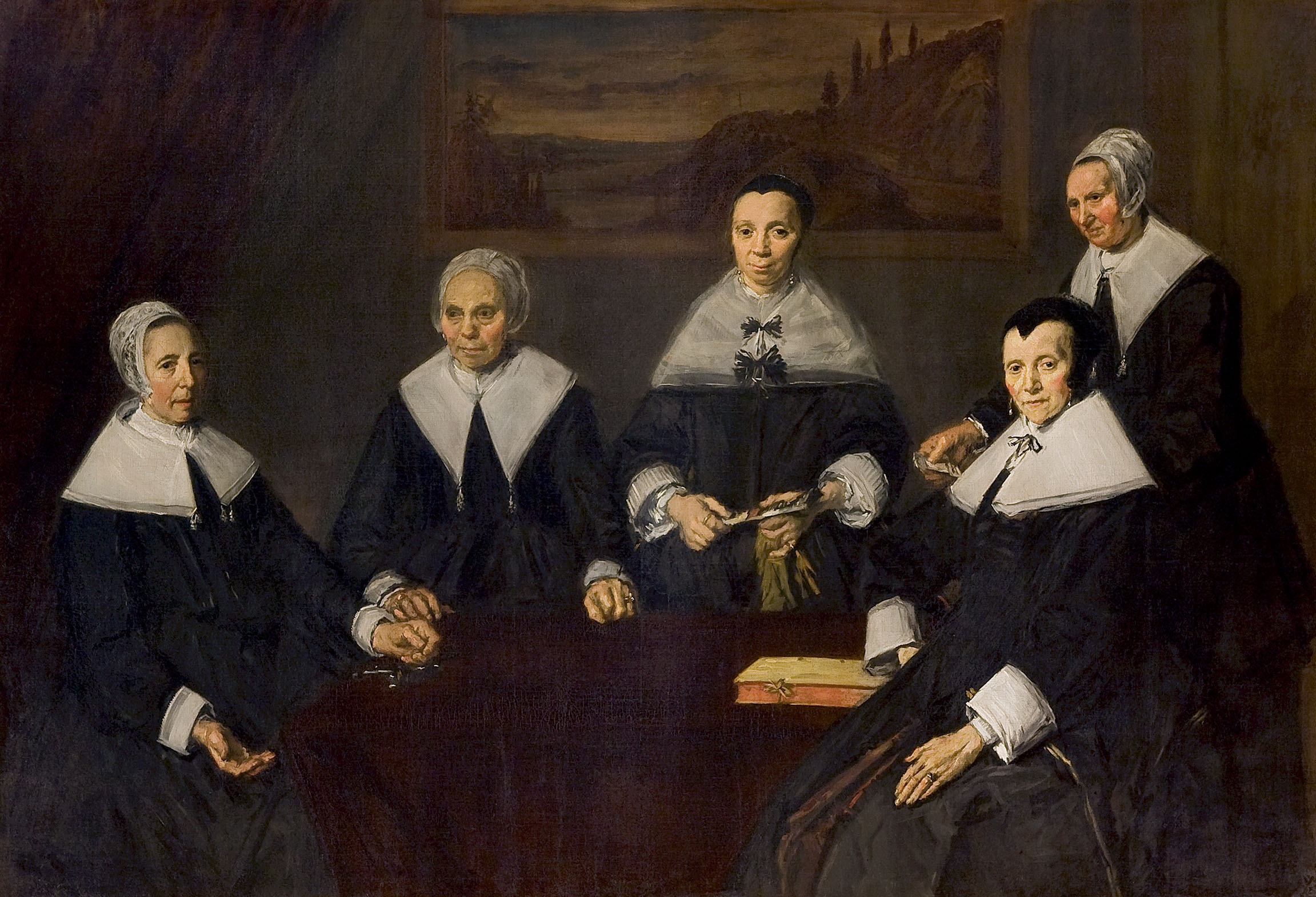
This painting below, the Regentesses of the Old Men's Almshouse (1664) by Frans Hals, is also unrelated. I'm not showing it to you so you can interpret how the painter feels about these women. Do you think he likes them? If I told you that he relied on these 5 women for financial support, how does that affect your interpretation of the piece? Don't worry about it. It's unrelated.
I'm not going to tell you how this one finishes. I've made my point! I think you should read Hell Screen and see for yourself. I'm not Pyrocynical. You can still enjoy the media once you've read my review. I'll be moving onto the latter half of the book now, which is different enough for me to call it Part 2.
